

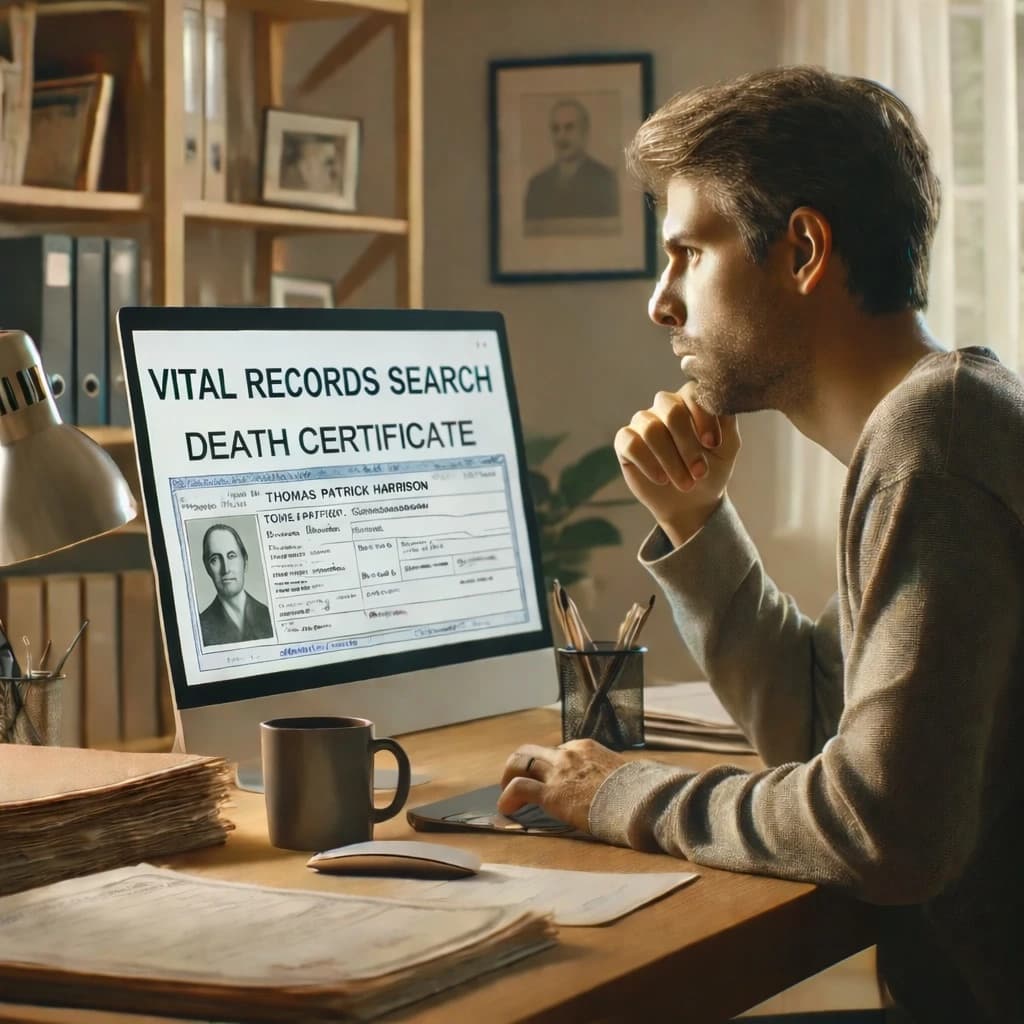
When someone passes away, you may need to get a copy of their death certificate. This legal document confirms a person’s death and includes important details. It’s often required for handling financial matters, claiming benefits, or settling estates.
If you’re unsure how to find a death certificate, you’re not alone. Many people don’t know where to start. The good news? The process is easier than you might think—especially if you follow the steps below. Let’s walk through how to find a death certificate, step by step.
A death certificate is an official document issued by a government office. It serves as legal proof that someone has died. It typically includes:
A medical professional, such as a doctor or coroner, signs the certificate. Then, the local or state government files and stores it.
People request death certificates for many reasons. Here are some of the most common:
In most cases, you’ll need more than one copy. So, it’s smart to order extra certified copies when you make your request.
Before requesting a death certificate, you must confirm where and when the death occurred. Death certificates are filed based on the location of death, not where the person lived. Even small errors can cause a search to fail. Accuracy is essential.
If you are missing details, start by searching for a death notice or obituary.

A death notice often provides the exact information that vital records offices require to locate the official record. Using a death notice first saves time and reduces rejected requests.
Vital records searches are date-specific. Being off by even one day can prevent the record from being found. A death notice usually lists the official date of death, removing uncertainty.
Death certificates are filed at the state or county level where the death occurred. A death notice typically lists the city and state of death, which tells you exactly which office to contact.
Many death notices identify the county of death or name the funeral home involved. Funeral homes file the original death certificate and can often confirm where it was recorded if the state office cannot locate it immediately.
Death notices frequently include full legal names, including middle names, maiden names, or suffixes. This prevents delays caused by nicknames, spelling variations, or incomplete information.
If you are unsure whether a death certificate exists or where to begin, a death notice offers a reliable first step. The Legacy Obituary and Death Notice search provided by The U.S. Will Registry allows you to search by name, date, or location. This helps confirm key details before submitting a request.
Once you confirm the date and location of death, contact the appropriate state or county vital records office. Each state manages death records differently. Some states process requests at the state level, while others require county requests.
To find the correct office:
Search “[State Name] Vital Records”
Confirm whether the state or county handles requests
Review the available ordering methods
Always follow instructions listed on official government websites.
Before submitting your request, gather all required details. Missing or incorrect information can delay processing. Most offices require:
Some states may also ask for the person’s birthdate or Social Security number. The more details you have, the faster the process will be.
Not everyone can access a death certificate. Most states limit who can request one.
In general, you must be:
Some states allow the public to request older death records. These are usually for deaths that occurred over 25 to 50 years ago.
There are three main ways to request a death certificate:
Many states partner with approved online services like VitalChek. These secure websites allow you to order online with ease.
You’ll need:
Online requests are often the fastest. You may receive the certificate in 1–2 weeks.
You can also mail in your request. Visit your state’s vital records website to download the form. Then:
Mail-in requests may take 2–4 weeks or longer to process.
Some offices allow you to apply in person. Bring your ID, payment, and all required information. If available, this is the quickest way to get a certificate on the spot.
Most states charge a fee for each copy. Prices usually range from $10 to $25. Some states offer discounts for extra copies ordered at the same time.
Check your state’s website for the most current fee schedule.
Once you submit your request, processing time will vary. Online requests usually arrive first. Mail-in requests take longer. Some offices offer expedited service for an extra fee.
While you wait, keep your confirmation number and receipt handy in case you need to follow up.
Sometimes, the process doesn’t go as planned. If you run into issues, try these helpful steps:
Even small errors—like a misspelled name or incorrect date—can cause delays. Double-check all the information you provided.
If the state office can’t find the record, try the county clerk where the person died. Local offices sometimes maintain their own records.
The funeral home may still have a copy or know where it was filed. They often assist with filing the original certificate.
An obituary may confirm the date and place of death. This info can help you pinpoint where to search next.
Helpful Resource:
The U.S. Will Registry offers a free Legacy Obituary and Death Notice section. You can search by name, date, or location. This tool is especially useful when you’re unsure where to start. https://theuswillregistry.org/obituaries-and-death-notices
Sites like Ancestry.com, FamilySearch.org, or FindAGrave.com often include public death records. While they aren’t official documents, they can confirm facts and guide your search.
If you’re researching family history, you may need records from 50 or even 100 years ago. Here’s what you can do:
Many states allow public access to older death certificates. These may not be certified, but they still contain helpful details.
To make the process easier, follow these tips:
Finding a death certificate doesn’t have to be stressful. When you follow these steps—confirm the location, contact the right office, and gather the right info—you’ll move through the process with ease. Remember, this document isn’t just paperwork. It’s often the first step toward closing legal matters, honoring someone’s life, and giving their family peace of mind. And if you’re just starting your search, be sure to explore The U.S. Will Registry’s free Legacy Obituary and Death Notice section. It may be the key to unlocking the information you need.
To find a death certificate in the United States, start by confirming where the person died. Death certificates are filed at the state or county level. Next, contact the state’s vital records office or county clerk. Most states allow online, mail-in, or in-person requests once you provide required details and identification.
You can get a certified copy of a death certificate from the state or county vital records office where the death occurred. Many states partner with online services that process secure requests. Certified copies are required for legal matters such as estate settlement, insurance claims, property transfers, and government benefit applications.
Eligibility to request a death certificate depends on state law. Typically, immediate family members, executors, attorneys, or individuals with a legal interest may request one. Some states allow public access to older death certificates, usually those issued 25 to 50 years ago, especially for genealogy or historical research purposes.
Processing times vary based on how you order. Online requests often arrive within one to two weeks. Mail-in requests may take several weeks. In-person requests, when available, can sometimes be completed the same day. Expedited processing is often available for an additional fee through state vital records offices.
This article was prepared by estate planning researchers and reviewed by S. Miller and staff. With more than 25 years of experience in estate planning documentation and probate processes, our editorial oversight ensures clarity and accuracy. This content is provided for informational purposes only and does not constitute legal advice.
[View Our Editorial Policy]