How to Get a Certified Copy of a Will
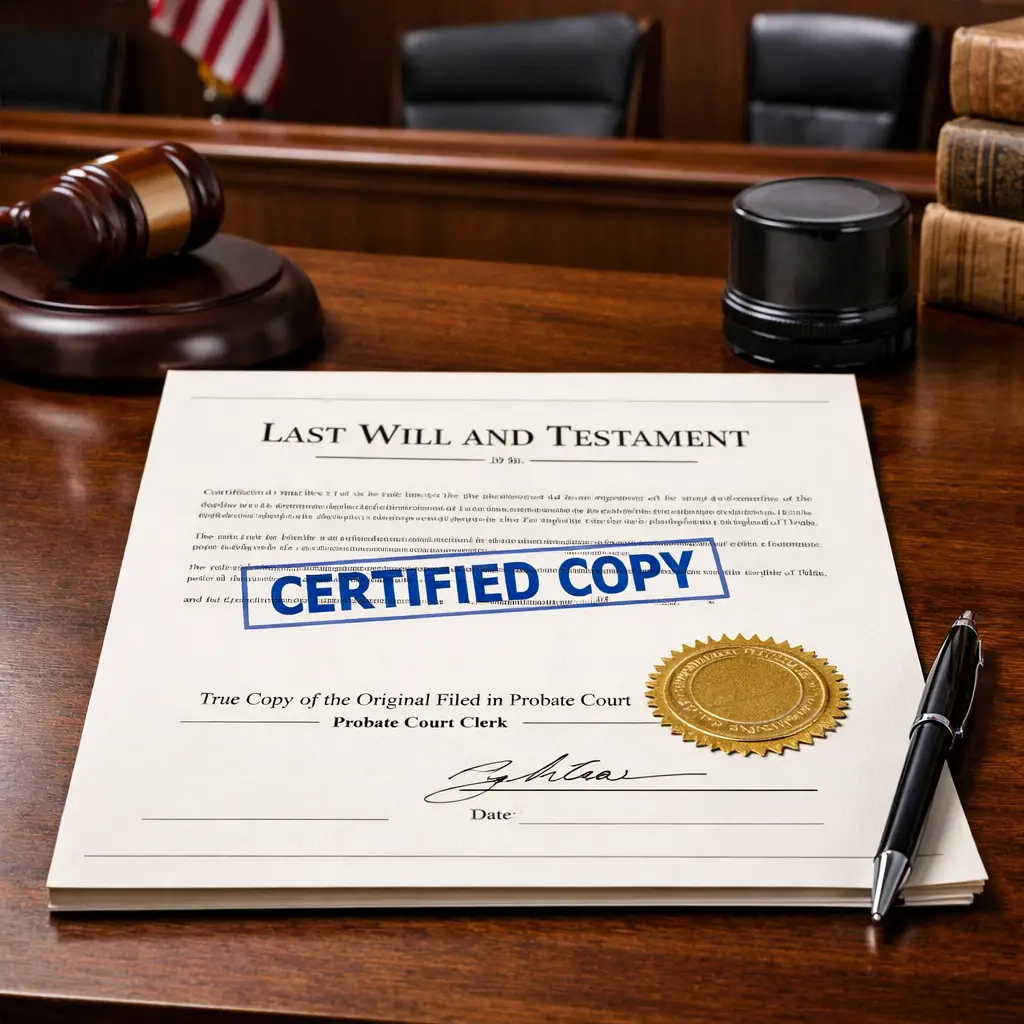
How to get a certified copy of a will becomes important when legal proof of a document is required after someone dies. Financial institutions, government agencies, and courts often require an official copy before allowing an executor or beneficiary to take action. Understanding where to request this document and how the process works can help families avoid delays and move estate administration forward efficiently.
An official certified copy is not just a regular photocopy. It is a document issued by the probate court that includes an official seal or certification statement verifying that it matches the will filed with the court. This certification gives the document legal credibility.
Because certified copies are issued directly by probate courts, understanding this process ensures that estate actions are legally recognized and properly documented.
What Is a Certified Copy of a Will
A certified will copy is an officially verified version issued by the probate court after the original will has been filed. The court clerk confirms that the document is accurate and attaches a certification, often including a seal or stamp.
This official version is typically required when:
- transferring real estate
- accessing bank accounts
- claiming insurance benefits
- managing retirement accounts
- handling legal or financial transactions
Without certification, many institutions will not accept the document.
Why Court Verified Copies Are Important
Certified copies serve as official proof of authority during estate administration. Without them, executors may be unable to act on behalf of the estate.
Institutions rely on these documents to:
- confirm the validity of the will
- verify the executor’s authority
- protect against fraud or disputes
Because of this, obtaining these official copies early is a critical step in managing estate responsibilities.
When You Can Get an Official Will Copy
A court-certified copy becomes available only after the original will has been filed with the probate court. This usually happens shortly after death when the executor or another responsible party submits the will.
Once the court accepts the filing and opens the estate, certified versions can be requested from the clerk’s office. The timing varies by state, but families should expect this step to occur early in the probate process.
If the will has not yet been filed, a certified document cannot be issued. In that situation, the priority is locating the original will.
Where to Get a Certified Copy
Certified copies are issued by the probate court in the county where the deceased person lived or owned property. The clerk’s office is responsible for processing requests.
To obtain a certified will copy, you typically need:
- the full legal name of the deceased
- date of death
- case or estate number (if available)
- identification or proof of relationship
Some courts allow requests in person, by mail, or online.
Related Article: Complete Guide to Find a Will in Probate Court
Who Can Request a Certified Copy
In most cases, the following individuals can request official copies:
- the executor named in the will
- beneficiaries
- heirs
- attorneys representing the estate
Some courts allow public access once probate has been opened, while others require proof of interest. Because rules vary by jurisdiction, it is best to contact the probate court directly.
How Many Certified Copies Should You Get
Executors often request multiple certified copies at once. This helps avoid delays when working with different institutions.
You may need separate certified copies for:
- banks and financial accounts
- insurance companies
- real estate transfers
- vehicle title changes
- investment firms
Ordering several copies early can save time and prevent repeated court visits.
What To Do After You Obtain An Official Certified Will Copy
Once a certified copy is obtained, the next step is to use it to carry out estate responsibilities. This document serves as official proof of authority and allows executors or beneficiaries to begin managing financial and legal matters.
First, provide certified copies to banks, investment firms, and insurance companies to access accounts or process claims. Next, use the document when transferring real estate, vehicles, or other titled assets. Many institutions will require their own certified copy, which is why obtaining multiple copies is important.
In addition, the certified will document may be needed when working with attorneys, filing additional probate documents, or resolving creditor claims. Keeping organized records of where each copy is submitted helps prevent delays and confusion.
Acting promptly after receiving certified copies helps ensure that estate administration moves forward smoothly and that all responsibilities are handled in accordance with the will.
What If You Cannot Get a an Official Copy
If an officate copy of a will is not available, it usually means the will has not yet been filed with the court or cannot be located. In that case, the next step is to identify where the original will is stored.
Families may need to:
- contact the drafting attorney
- check with financial advisors
- search safe deposit boxes
- review personal records
Related Article: Can’t Find a Will? What Happens Next When No Will Is Located
Final Thoughts
How to get a certified copy of a will is a straightforward process once probate has begun and the original document has been filed. By contacting the correct probate court, understanding who can request copies, and ordering enough certified versions, families can move forward with greater clarity and confidence.
In addition, taking this step early helps prevent delays, supports smooth estate administration, and ensures that legal and financial matters are handled properly. As a result, families can manage responsibilities more efficiently and avoid unnecessary complications. Therefore, acting promptly provides both legal clarity and peace of mind.
FAQ Related to How to get a certified copy of a will
To get a certified copy of a will after someone dies, you must contact the probate court where the will was filed. Provide the deceased’s name, date of death, and case number if available. Once the court accepts the will and opens the estate, the clerk can issue certified copies upon request.
The time required to receive a certified copy of a will depends on the probate court and how quickly the will was filed. In many cases, copies are available shortly after the estate is opened. Some courts provide same-day service, while others may take several business days to process requests.
The cost to get a certified copy of a will varies by county and state. Courts usually charge a small fee per page along with a certification fee. Executors often request multiple certified copies at once to avoid additional requests later when dealing with banks, insurance companies, and property transfers.
You cannot get a certified copy of a will if probate has not started because the court does not yet have the document on file. The original will must first be submitted to the probate court. Once the estate is opened and accepted, certified copies become available through the clerk’s office.
Editorial Review:
This article was prepared by estate planning researchers and reviewed by S. Miller and staff. With more than 25 years of experience in estate planning documentation and probate processes, our editorial oversight ensures clarity and accuracy. This content is provided for informational purposes only and does not constitute legal advice.
[View Our Editorial Policy]